The Security Tools We Forgot to Retire
Cybersecurity programmes are good at adding controls but often struggle to retire them. A mature security roadmap must preserve necessary outcomes while deliberately leaving obsolete tools behind.
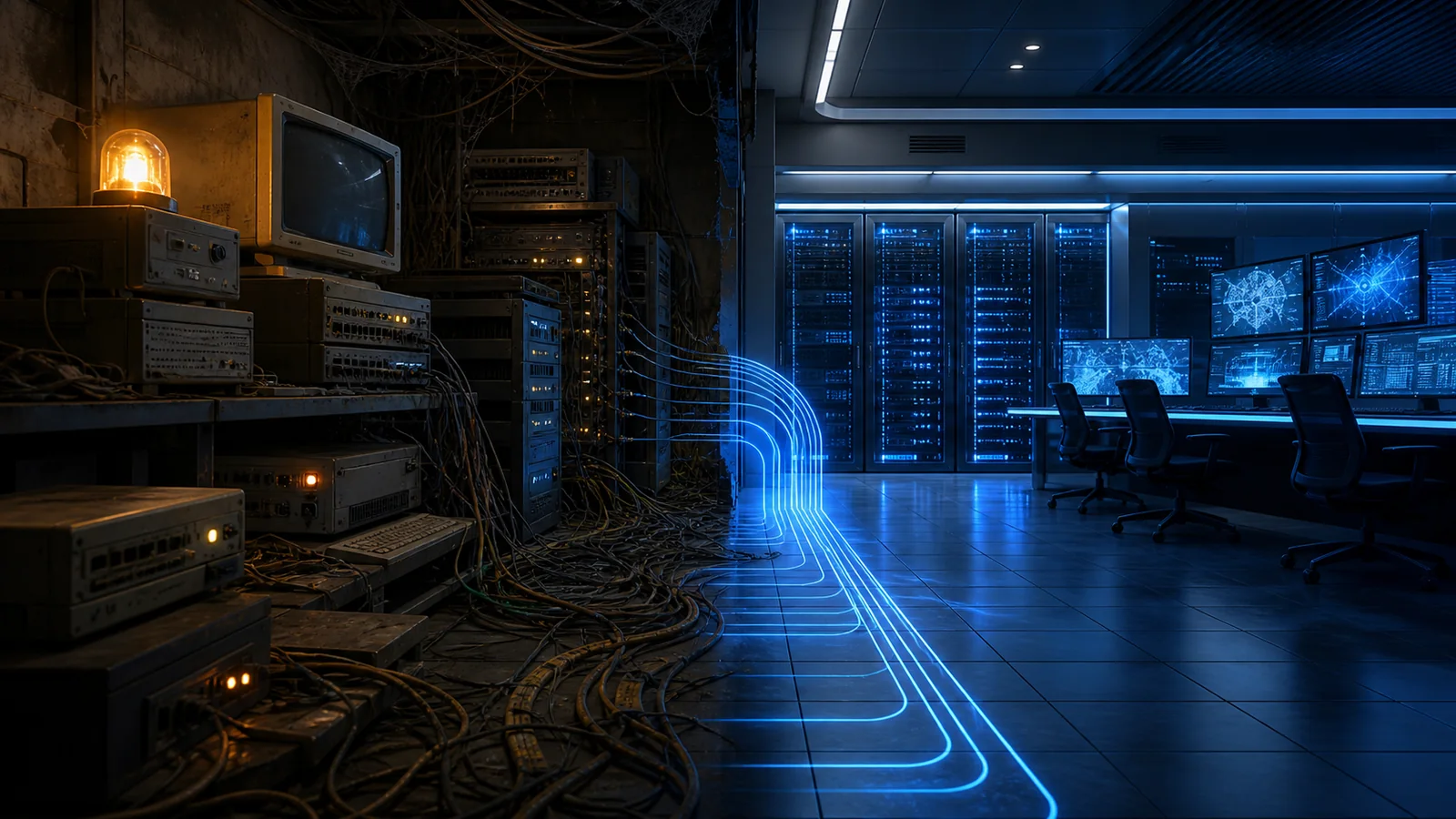
Cybersecurity programmes are usually designed around addition.
A new risk appears, so we introduce a new control.
A regulatory requirement changes, so we purchase another platform.
A security incident exposes a gap, so another tool is added to the architecture.
Over time, the security environment becomes larger, more integrated and more expensive. Yet while organisations are generally good at introducing new security tools, they are often far less comfortable retiring the old ones.
The result is a security stack containing tools that are technically still operational but no longer provide sufficient value.
They remain licensed. They continue generating alerts. They still appear in architecture diagrams. Someone may even produce a monthly report from them.
But nobody is quite sure whether they are still protecting anything important.
Security Tools Rarely Leave Quietly
Applications are normally retired when they reach end of life, become unsupported or are replaced by a new platform.
Security tools are different.
They often remain because removing them feels risky. The organisation may worry that decommissioning a control will create a security gap, affect regulatory compliance or remove a capability that might still be needed.
There may also be uncertainty about ownership.
The team that originally implemented the tool may no longer exist. The architecture may have changed. Documentation may be outdated, and integrations may have been built over several years by different vendors and administrators.
Instead of investigating whether the tool is still required, the easier decision is often to renew it for another year.
This is how temporary controls become permanent infrastructure.
More Tools Do Not Always Mean More Protection
A large security stack can create an impression of maturity.
There are platforms for endpoint protection, network monitoring, vulnerability management, identity governance, data protection, cloud security, application security, threat intelligence and incident response.
Each tool may have a legitimate purpose. The difficulty begins when several tools provide similar capabilities.
A Data Loss Prevention platform may inspect sensitive information. A Cloud Access Security Broker may also monitor data movement. A Data Security Posture Management platform may discover and classify the same data. Meanwhile, the cloud platform itself may already include native data protection functions.
This does not automatically mean that any of these controls should be removed. Their coverage, enforcement points and operational purposes may be different.
But overlap should be understood, not assumed to be beneficial.
When several products detect the same activity, the organisation may receive more alerts without gaining better visibility. Analysts spend time comparing dashboards, investigating duplicated findings and deciding which system represents the authoritative source.
Complexity begins to consume the security capacity it was supposed to strengthen.
The Quiet Cost of Keeping Everything
The cost of an ageing security tool is not limited to its licence.
It may require infrastructure, storage, vendor support, integration maintenance, specialist knowledge, access reviews, vulnerability remediation and audit evidence.
It may also create hidden dependencies.
Other platforms may send logs to it. Incident-response procedures may refer to it. Compliance reports may depend on its data. A legacy application may use an integration that nobody wants to modify.
These dependencies make retirement difficult, but they do not necessarily justify permanent retention.
They simply mean that decommissioning must be treated as a controlled security transition.
This matters as cybersecurity spending continues moving towards technology and outsourced services. ENISA’s cybersecurity investment findings highlight the continuing pressure on organisations to modernise technology while dealing with skills shortages, legacy environments and increasing supplier dependency.
Adding technology without removing obsolete capabilities can make that dependency even deeper.
A Tool Can Be Supported and Still Be Obsolete
End-of-support dates are useful, but they should not be the only trigger for retirement.
A security tool may still be supported by its vendor while no longer fitting the organisation’s architecture.
It may have been designed for an on-premises environment while workloads have moved to the cloud. It may rely on network boundaries that no longer represent how users, devices and applications connect. It may provide controls that are now available through a strategic enterprise platform.
Some tools become obsolete because the technology has changed.
Others become obsolete because the organisation has changed.
A supported product can therefore remain operational while becoming strategically irrelevant.
This is why security lifecycle management must evaluate more than technical health. It should also consider capability relevance, control effectiveness, integration value, operational adoption and total cost of ownership.
Retirement Is Not the Same as Removal
Decommissioning a security tool should never begin by simply switching it off.
The first question is not, “Can we remove this product?”
The better question is, “Which security capability does this product currently provide, and where will that capability exist after retirement?”
That distinction is important.
Organisations do not need to preserve every tool. They need to preserve the security outcomes that still matter.
Before retiring a control, the organisation should establish:
- Which applications, users, data and environments depend on it
- Which threats or compliance requirements it addresses
- Whether another control provides equivalent or stronger coverage
- Which integrations, reports and response procedures rely on it
- Whether historical data must be retained
- How the replacement capability will be tested
- What fallback arrangement exists during the transition
This turns decommissioning into an architecture and risk decision rather than a cost-cutting exercise.
Some Tools Should Be Consolidated, Not Immediately Retired
Not every overlap requires removal.
Sometimes the right decision is consolidation. Different tools may continue protecting different environments during a transition period. A legacy control may remain necessary for a critical application that cannot yet adopt the strategic platform.
In other situations, a feasibility study may be required before any decision is made.
The organisation may need to compare detection coverage, operational performance, integration capability, implementation cost and residual risk. It may also need a pilot to confirm that the proposed replacement works in the actual environment, not merely in a vendor presentation.
The objective is not to reduce the number of tools at all costs.
It is to ensure that every retained tool has a defined purpose, accountable owner and measurable contribution to the organisation’s security posture.
Security Roadmaps Need Exit Plans
Most security roadmaps show when new controls will be introduced.
Few show when existing controls will be consolidated, replaced or decommissioned.
This creates a future-state architecture built on top of the current state rather than a genuine transition towards it.
A mature roadmap should show both directions:
What the organisation plans to introduce, and what it plans to leave behind.
Every major security investment should eventually have lifecycle questions attached to it:
How long is this capability expected to remain strategic?
What conditions would trigger its replacement?
Can it integrate with the future architecture?
Who will decide when it no longer provides sufficient value?
Without these questions, today’s strategic security platform can easily become tomorrow’s forgotten legacy tool.
Final Thought
Cybersecurity maturity is not demonstrated by how many products appear in the control landscape.
It is demonstrated by whether the organisation understands what each control protects, how effectively it performs and whether it still belongs in the architecture.
Some legacy tools will need to remain. Some should be enhanced. Some can be consolidated into strategic platforms. Others should be retired because their cost, complexity and operational burden are no longer justified by the protection they provide.
Removing a security tool can create risk.
But retaining a tool without understanding its purpose creates a different risk: an environment that becomes too complex to operate, too expensive to sustain and too fragmented to defend.
The future security stack should not be built by continuously adding controls to the past. It should be built by making deliberate choices about what must remain, what must evolve and what the organisation must finally leave behind.
Because sometimes, improving security is not about adding another control. It is about having the courage to retire one.
Question assumptions. Share knowledge. Build trust.
Share this article
If this perspective was useful, share it with your network.