More Accounts, Less Trust: The Slow Decline of Social Media
Account growth does not necessarily mean healthier social interaction. Public platforms may be expanding numerically while meaningful conversation retreats into trusted private circles.
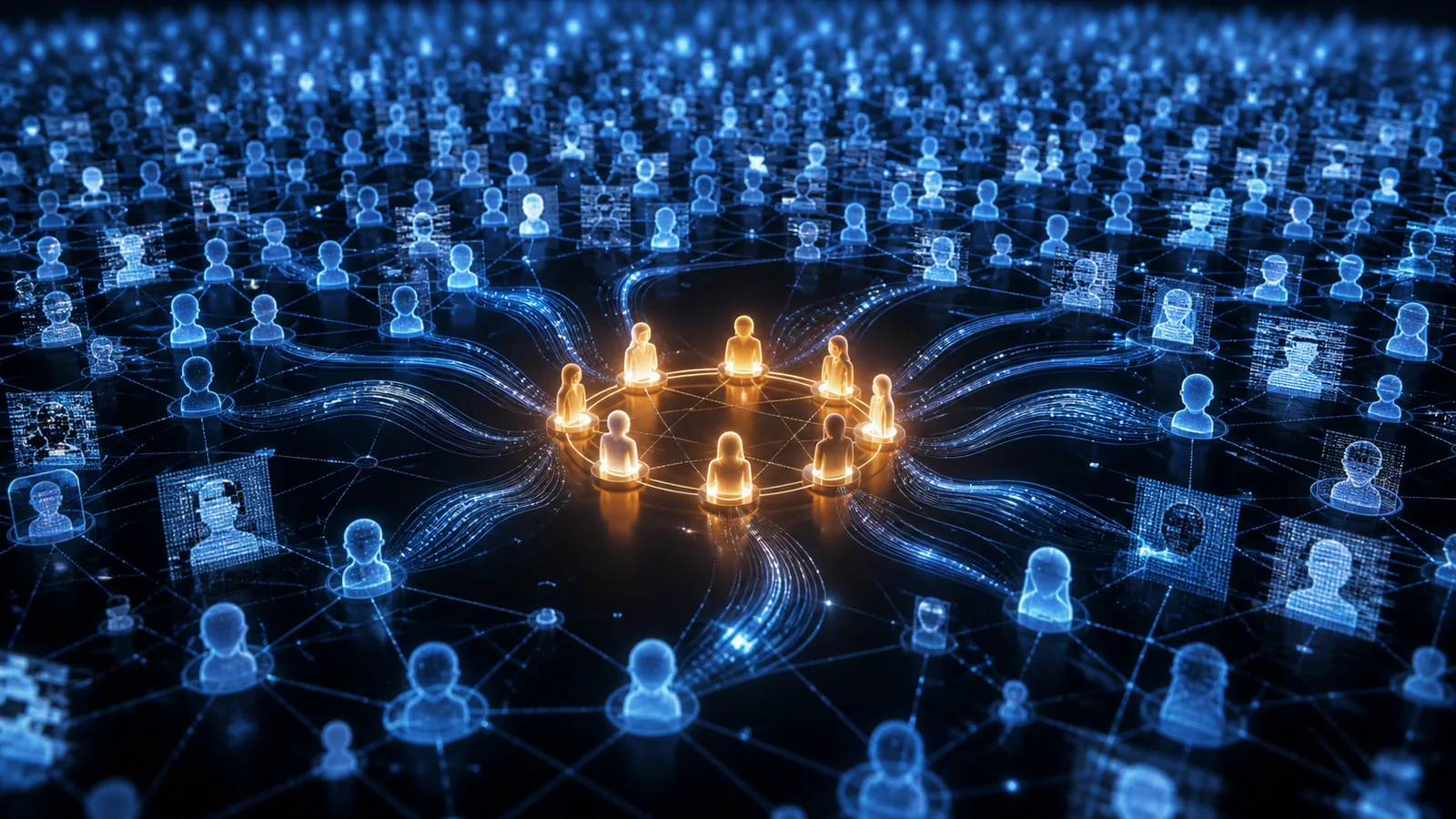
Social media platforms continue to report billions of users.
Every year, the numbers appear to move in the same direction. More accounts. More content. More views. More engagement.
On the surface, social media appears stronger than ever.
But those numbers may not tell us whether social media is still healthy. They only tell us that more accounts exist.
An account is not necessarily a person. A view is not necessarily attention. Engagement is not necessarily trust.
Behind the growth figures, something else may already be happening.
Social media may be slowly declining as a genuinely social environment.
More Accounts Do Not Always Mean More People
According to DataReportal, there were approximately 5.79 billion social media user identities worldwide in April 2026.
The important phrase is user identities.
These figures do not necessarily represent 5.79 billion unique individuals. One person may operate several personal, professional, anonymous or business accounts across multiple platforms.
The total may also include duplicate accounts, abandoned profiles, automated bots, fake identities, impersonation accounts and increasingly, AI-generated personas.
This means social media can continue reporting growth even when authentic human participation has started to stagnate.
The number of accounts may be increasing.
But are more real people joining the conversation?
Or are the platforms simply becoming more crowded with accounts that do not represent genuine human relationships?
Social Media Is Becoming Less Social
The original promise of social media was simple.
It allowed people to reconnect with old friends, maintain relationships, exchange ideas and participate in communities beyond geographical boundaries.
People posted because they wanted to share something with other people.
That experience is changing.
Today, our feeds are increasingly filled with content from people we do not follow, advertisements we did not request, opinions designed to provoke us and videos selected by algorithms to maximise the time we spend scrolling.
The platform decides what we should see.
The objective is no longer simply to connect us with people. It is to continuously capture and monetise our attention.
Social media is gradually moving from a social network into a content distribution network.
People still consume content, but many are becoming less willing to participate openly.
Public Participation Is Becoming Uncomfortable
Posting publicly now carries a different level of risk.
A personal opinion can attract attacks from strangers. A harmless photograph can be copied or misused. A comment can be removed from its original context and circulated to a completely different audience.
Users must also consider scams, impersonation, harassment, data collection and the possibility that they are arguing with a bot rather than another person.
This creates a strange environment.
People may have hundreds or thousands of followers, but feel increasingly uncomfortable saying anything meaningful in front of them.
They remain on the platform, but they post less.
They scroll, watch and observe.
This is not the disappearance of users. It is the disappearance of genuine participation.
Social media may still have the audience, but it is gradually losing the conversation.
People Are Retreating Into Trusted Circles
As public platforms become noisier, people are moving towards smaller and more controlled spaces.
Instead of posting a family photograph publicly, they share it in a WhatsApp group.
Instead of discussing a sensitive issue on Facebook or X, they send it directly to selected friends.
Instead of speaking to an unknown audience, they use Instagram Close Friends, Telegram groups, Discord communities or private Facebook groups.
These closed-loop environments feel safer because the audience is known.
People understand who will receive the message. They know the context of the conversation. They can decide who is allowed to participate.
The future of online interaction may therefore become much more private.
People will continue discovering information through public platforms, but the meaningful discussion will happen somewhere else.
They will discover in public but engage in private.
AI Content May Accelerate the Decline of Trust
Artificial intelligence will make content easier and cheaper to produce.
It will also make authenticity more difficult to determine.
AI can already generate articles, photographs, voices, videos, comments and complete online identities. In the next few years, social platforms may be flooded with content that looks human but was produced or distributed automatically.
The platforms may experience an explosion in content volume.
But more content does not automatically create more value.
If users cannot determine whether a photograph is real, whether a comment was written by a person or whether an account represents an actual human being, trust will decline.
People may respond by becoming even more selective about where and with whom they communicate.
A message from a trusted friend in a private group will carry more value than one thousand anonymous reactions from accounts they cannot verify.
In an internet filled with synthetic content, familiarity may become a new form of credibility.
Public Platforms Will Not Disappear Completely
Facebook, X, Instagram, TikTok and other public platforms are unlikely to vanish soon.
They remain powerful channels for entertainment, advertising, public influence, political communication, news distribution and product discovery.
Businesses need them to reach customers. Politicians need them to shape public opinion. Creators need them to build visibility. Media organisations need them to distribute content.
But their function may continue to change.
Facebook may increasingly resemble a marketplace, community directory and advertising platform.
Instagram may become a visual entertainment and influencer platform.
X may remain relevant for breaking news, technology, politics and real-time commentary.
People may continue using these platforms without considering them trusted social spaces.
Social media can survive commercially while declining socially.
That is the distinction hidden behind the user numbers.
Growth Can Hide Decay
Traditional measurements focus on accounts, active users, impressions, views and engagement.
These metrics are useful to advertisers, but they do not measure the quality of human interaction.
They do not tell us whether users trust one another.
They do not show how many people are afraid to post publicly.
They do not distinguish a genuine conversation from automated engagement.
They do not measure how much meaningful communication has already moved into private channels.
A platform may therefore report record activity while its social value continues to deteriorate.
More accounts can create the appearance of growth.
More bots can create the appearance of engagement.
More AI content can create the appearance of creativity.
But none of these necessarily means that more people are meaningfully connected.
The Future May Be Smaller and More Private
The next stage of social media may not involve another giant public platform.
It may involve smaller communities built around existing relationships, shared interests and controlled membership.
People may choose relevance over reach.
They may value ten trusted responses more than one thousand reactions from strangers.
The public internet will remain important for discovering information, ideas, products and people. But personal interaction may continue moving behind closed doors.
Social media is therefore not necessarily approaching a sudden end.
Its decline may be slower and less visible.
The platforms will remain online. Account numbers may continue increasing. Content volumes may reach record levels.
But ordinary people may gradually stop treating these platforms as places where they genuinely socialise.
They will watch more and share less.
They will discover publicly and discuss privately.
They will maintain accounts while moving their real relationships elsewhere.
Social media may continue growing numerically while slowly dying socially.
The decline of social media will not begin when people delete their accounts. It will begin when they no longer trust the people, content and conversations inside them.
Share this article
If this perspective was useful, share it with your network.