The AI Gateway Should Govern Trust, Tokens And Tools
As enterprise AI connects models, agents, MCP servers, tools and data, the gateway becomes a security and cost-governance control point for deciding what can be trusted, called, shared and reused.
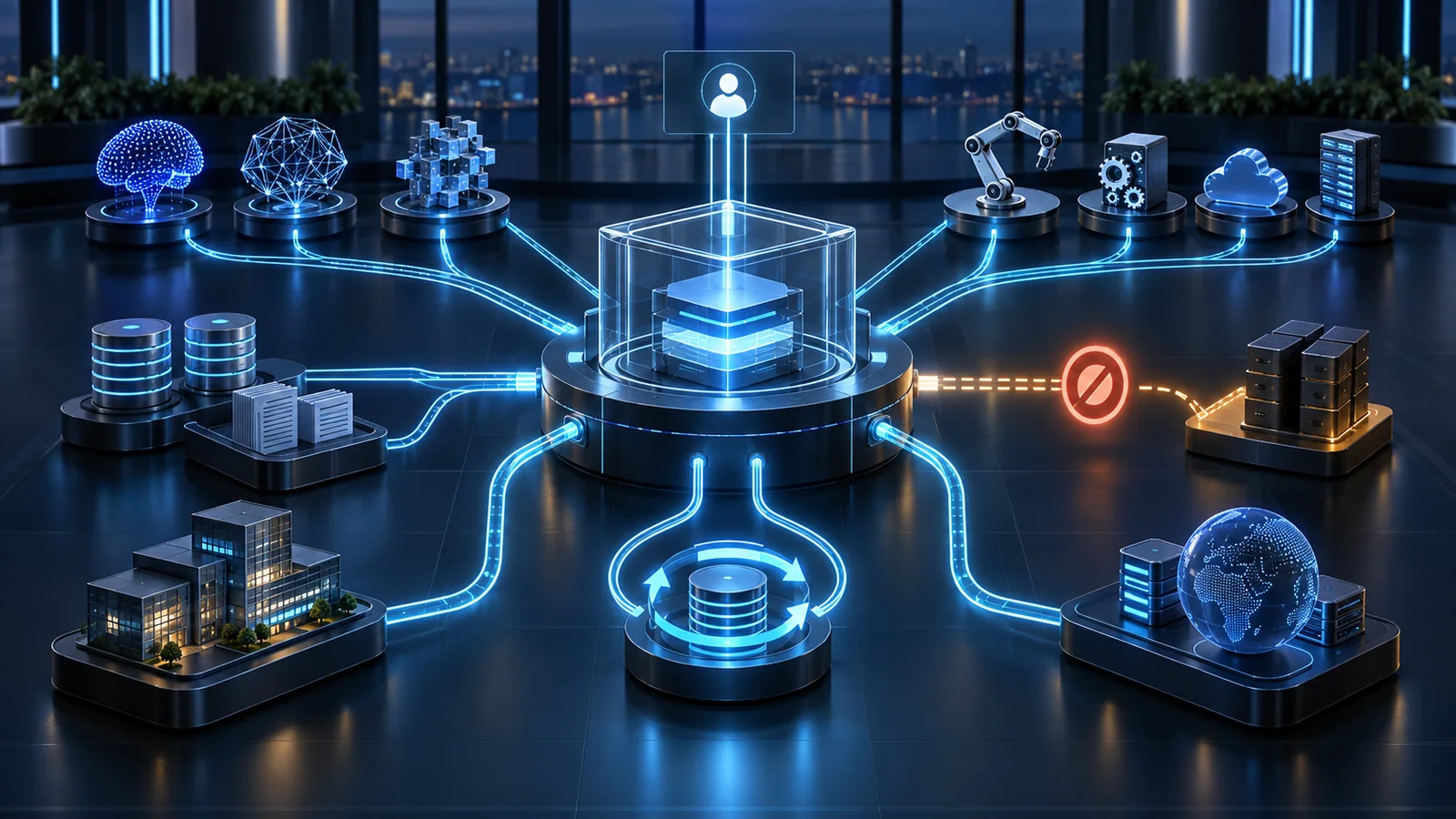
Enterprise AI is becoming more connected. One model talks to another, AI agents call APIs, MCP servers expose tools and data, enterprise applications provide context, and cloud services provide models.
That connectivity creates capability. It also creates complexity.
The question is no longer simply, “Which LLM should we use?” A more important question is emerging: Who decides what the AI is allowed to trust, what it is allowed to call, and how much it is allowed to consume?
That is where the AI Gateway becomes important.
The AI Gateway Is More Than A Router
At first glance, an AI Gateway may look like a traffic-management layer. A user sends a prompt, the gateway decides which model should answer, and if more context is required, it may call an MCP server or another tool before returning the response.
In a real enterprise environment, however, the gateway can become much more than a router. It can become a control point where the organisation decides which models are approved, which MCP servers can be used, which identities can access which tools, what data can cross boundaries, and what actions require additional approval.
That makes the AI Gateway part of the security architecture.
Trust Must Be Explicit
MCP makes it easier for AI systems to connect to tools and enterprise data. That is powerful, but it also introduces another trust problem.
Should every user be allowed to call every MCP server? Should every MCP server be trusted equally? Should an AI agent that can read documents also be allowed to execute transactions? Should one compromised MCP connection provide a path into other enterprise systems?
The answer should not depend entirely on the model deciding what is appropriate.
The gateway should enforce the trust model through identity, least privilege, tool-level authorisation, data classification, policy enforcement and auditability.
The AI may decide what it wants to do. The architecture should decide what it is actually allowed to do.
Tokens Are Becoming An Architecture Cost
There is another problem.
Tokens cost money, and poorly designed AI architecture can waste a lot of them.
A simple user question should not automatically trigger multiple models, multiple MCP calls and a full enterprise context dump. Yet that is exactly what can happen if orchestration is not designed carefully.
The gateway should therefore help decide whether the request actually requires an external model, whether an MCP call is needed, which MCP is relevant, whether a previous result can be reused, whether context can be summarised, whether unnecessary history can be removed, and whether a smaller model can handle the task.
This is where token optimisation becomes an architecture problem, not just a billing problem.
The Cheapest Request Is The One You Do Not Repeat
Caching becomes important here.
If the organisation repeatedly asks the same or very similar question, sending the entire request through the complete AI stack every time may be unnecessary. A well-designed AI cache can reuse safe and still-valid responses.
But caching AI is not the same as caching a web page.
The architecture must understand who asked the question, what data was used, whether the underlying information has changed, whether the cached response is still authorised for that user, and whether the response contains sensitive information.
A cache can save tokens and latency. It can also create a data-leakage problem if trust boundaries are ignored.
So AI caching must be context-aware.
Cost optimisation without security context is simply another risk.
Tools Need Governance Too
As enterprises connect more MCP servers, the number of available tools can grow quickly.
One MCP may provide access to documents, another to databases, another to security platforms, another to finance systems, and another to external SaaS services.
The wrong architecture would allow the AI to discover and call all of them freely.
A better model is selective orchestration.
The gateway first understands the request, then routes only to the tools required. A question about HR policy should not query the finance MCP. A security investigation should not automatically expose customer data. A read-only task should not receive write capability.
The more tools AI can reach, the more important tool governance becomes.
One Gateway Can Reduce Complexity
Without a central control point, every AI application may implement its own model connections, secrets, MCP integrations, logging, cost controls and security rules.
That creates inconsistency.
One application uses one model while another uses three. One stores long-lived API keys. Another sends excessive context. Another connects directly to an MCP server without central monitoring.
The AI Gateway can reduce this fragmentation by providing a consistent control plane for model routing, MCP access, token budgeting, caching, secrets management, data-loss controls, logging, rate limiting, policy enforcement and cost monitoring.
That does not mean everything should depend on one gateway without resilience.
A control point can also become a concentration risk.
The gateway itself must therefore be highly available, strongly governed and carefully segmented.
Security And FinOps Are Beginning To Meet
AI introduces an interesting architectural convergence.
Security wants to minimise unnecessary access.
FinOps wants to minimise unnecessary consumption.
Both goals often point in the same direction.
Do not send unnecessary data. Do not call unnecessary tools. Do not use an expensive model when a smaller one is sufficient. Do not repeat a request if a trusted answer already exists. Do not give an AI agent access to systems it does not need.
Efficient AI architecture can therefore be both cheaper and safer.
That is a useful outcome.
Final Thoughts
Enterprise AI will increasingly involve multiple models, MCP servers, tools, agents and data sources.
The challenge will not simply be connecting them.
Connecting systems is easy. Governing the connection is harder.
The AI Gateway should therefore become more than an integration layer. It should decide what can be trusted, what can be called, what data can move, what response can be reused, and how much intelligence the organisation is willing to pay for.
Because as enterprise AI grows, the biggest architecture problem may not be the model itself.
It may be everything the model is connected to.
The AI Gateway should govern trust, tokens and tools.
Question assumptions. Share knowledge. Build trust.
Share this article
If this perspective was useful, share it with your network.