Tomorrow’s Technology Cannot Be Protected With Yesterday’s Security Architecture
Tomorrow’s environments will be more distributed, autonomous and interconnected. Security architecture must adapt without abandoning enduring principles such as least privilege, defence in depth and resilience.
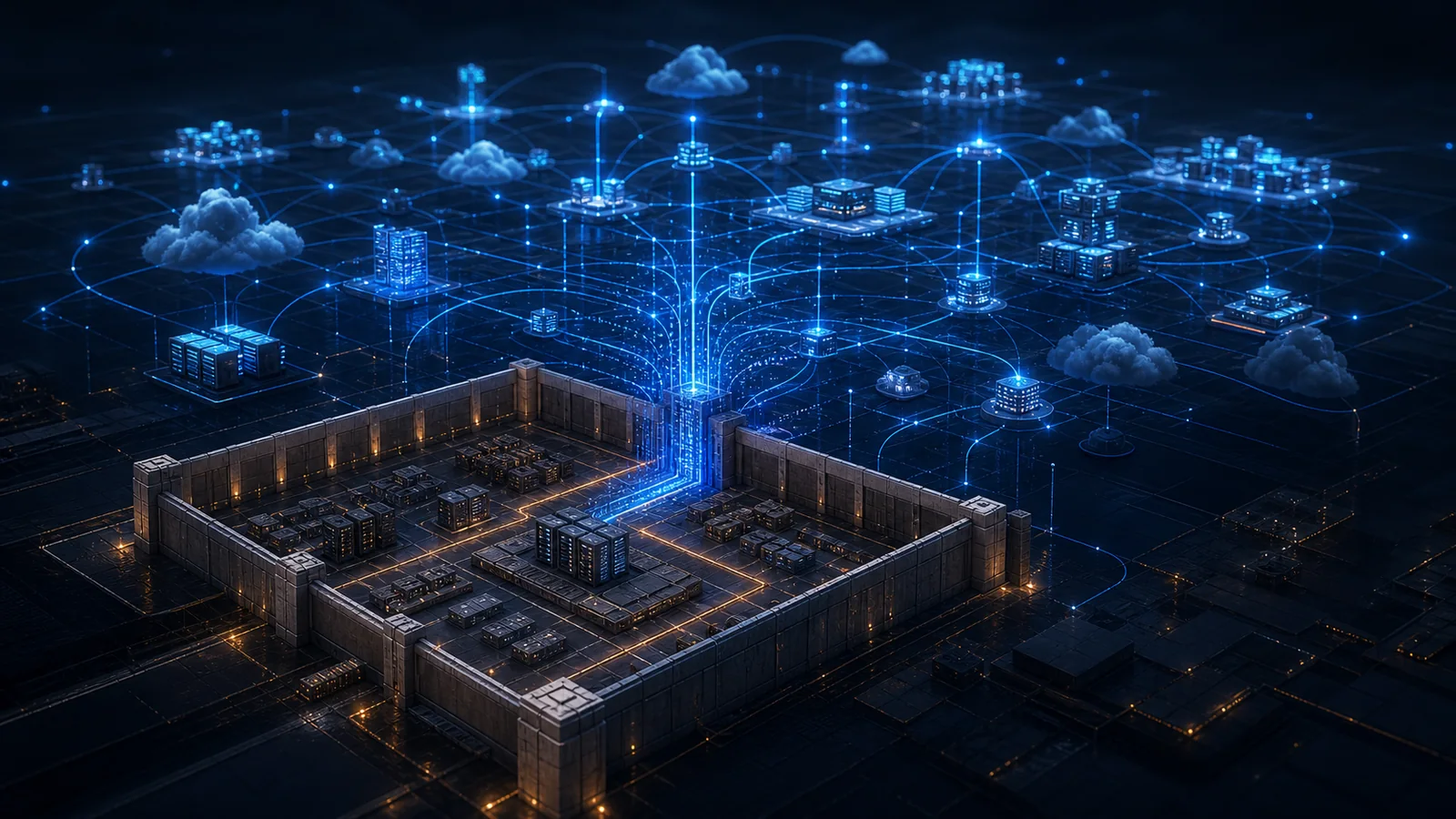
Technology is changing faster than most security architectures were designed to handle.
Cloud is becoming the default operating model.
Artificial Intelligence is moving from assistance to autonomous action.
Large Language Models are being embedded into enterprise workflows.
Machine identities are growing rapidly.
Quantum computing is forcing organisations to reconsider assumptions about cryptography.
Digital assets, tokenisation, edge computing and API-driven ecosystems are creating entirely new trust relationships.
Yet many organisations are still trying to secure these technologies using architecture principles designed for a very different world.
That creates a problem.
Because tomorrow’s technology cannot be protected with yesterday’s security architecture.
Cloud Changed Where The Boundary Exists
Traditional security architecture was built around infrastructure that organisations largely controlled.
Data centres.
Corporate networks.
Managed endpoints.
Defined network zones.
Cloud changed that model.
Applications now operate across multiple environments.
Data moves between SaaS, cloud platforms and on-premises systems.
Users connect from almost anywhere.
Workloads communicate through APIs rather than traditional network paths.
The security boundary therefore becomes less physical.
It becomes increasingly defined by identity, policy and data.
A firewall can still protect a network.
But it cannot by itself govern trust across an entire cloud ecosystem.
Future architecture must assume that infrastructure is distributed by design.
AI Changes Who Can Make Decisions
AI introduces a different architectural challenge.
Traditional applications generally perform predefined functions.
AI-assisted systems interpret information.
Recommend actions.
Generate content.
And increasingly, AI agents can execute tasks.
That means the security architecture must begin asking new questions.
What identity does the AI use?
Which systems can it access?
What data can it retrieve?
What decisions can it make?
What actions require human approval?
How quickly can its privileges be revoked?
An AI agent with excessive permissions is not simply an AI problem.
It is a privileged identity problem.
Future security architecture must therefore govern AI not only as software, but also as an actor within the enterprise.
LLMs Change The Data Boundary
Large Language Models create another complication.
Traditional applications usually process data through predictable workflows.
LLMs consume information in much broader ways.
Documents.
Prompts.
Knowledge repositories.
Email.
Search results.
Databases.
External content.
This creates new questions around data classification, confidentiality, retention and trust.
The important architectural question is no longer simply:
“Where is the data stored?”
It is also:
“What systems can understand, remember, transform or reproduce that data?”
Future data protection will therefore need to focus on the entire information lifecycle, not only storage and transmission.
Quantum Changes Cryptographic Assumptions
Some technologies change how systems operate.
Quantum computing may eventually change something more fundamental.
The assumptions behind cryptography.
Organisations have spent decades building trust around encryption, digital signatures and public-key infrastructure.
Those mechanisms underpin:
Online banking.
VPNs.
Certificates.
Software signing.
Secure communications.
Digital identities.
Blockchain.
Many of those systems depend on cryptographic algorithms that may need to be replaced or strengthened in a post-quantum world.
The immediate challenge is therefore not buying quantum technology.
It is developing crypto-agility.
Organisations should understand where cryptography exists, which algorithms are being used and how quickly they can be replaced when required.
The future security architect must therefore understand not only applications and networks, but also the cryptographic dependencies hidden beneath them.
Machine Identities Will Become More Important Than Human Identities
Enterprise environments are already filled with identities that do not belong to people.
Service accounts.
API credentials.
Certificates.
Workloads.
Containers.
Cloud identities.
Automation accounts.
AI agents will accelerate this trend.
Future environments may contain significantly more machine identities than human identities.
That changes identity governance.
Joiners, movers and leavers will no longer apply only to employees.
Machines will also need ownership.
Lifecycle management.
Privilege reviews.
Credential rotation.
Monitoring.
Revocation.
Identity architecture will increasingly become one of the most important parts of security architecture.
Future Architecture Must Assume Constant Integration
The modern enterprise is becoming an ecosystem rather than a collection of standalone systems.
Applications communicate through APIs.
AI agents call services.
Cloud platforms exchange information.
Third parties connect directly into business workflows.
Data moves continuously.
Every integration creates another trust relationship.
And every trust relationship can potentially become an attack path.
Future security architecture must therefore treat integration as a security design issue from the beginning.
Not after deployment.
Not during penetration testing.
During architecture.
Security Must Become More Adaptive
Traditional security architecture often assumes relatively static environments.
Create the network zone.
Apply the control.
Approve the architecture.
Operate it for several years.
That model is becoming harder to sustain.
Cloud environments change continuously.
AI capabilities evolve quickly.
New APIs appear.
Workloads are created and removed automatically.
Security architecture must therefore become more dynamic.
Policy-driven controls.
Continuous posture assessment.
Automated identity governance.
Real-time monitoring.
Adaptive access.
Continuous validation.
The architecture itself must be capable of responding to change.
Some Principles Should Not Change
The interesting part is that future technology does not necessarily require abandoning traditional security principles.
Many of the strongest principles remain the same.
Least privilege.
Separation of duties.
Defence in depth.
Secure by Design.
Strong identity.
Data protection.
Resilience.
Independent controls.
Recovery.
What changes is how those principles are implemented.
The technology may evolve.
The architectural thinking should remain disciplined.
Final Thoughts
The future technology landscape will not arrive all at once.
Some organisations will become almost entirely cloud-native.
Others will gradually adopt AI agents.
Some will experiment with tokenisation and digital assets.
Quantum technology may remain distant for some organisations while becoming strategically important for others.
The exact technology roadmap will differ.
But the architectural question remains the same.
Are we building security for the environment we have today?
Or for the environment the business is becoming?
Future security architecture must be ready for systems that are more distributed, more automated, more intelligent and more interconnected.
It must protect identities that are not human.
Data that moves beyond traditional boundaries.
Decisions made by machines.
Cryptography that may need to change.
And technologies that have not yet reached full maturity.
The objective is not to predict every future technology correctly.
It is to build an architecture capable of adapting when those technologies arrive.
Because tomorrow’s technology cannot be protected with yesterday’s security architecture.
Question assumptions. Share knowledge. Build trust.
Share this article
If this perspective was useful, share it with your network.