The AI Model Passed Every Test. It Was Still Compromised.
Microsoft researchers showed that modifying fewer than ten dormant neurons could backdoor an AI agent while leaving normal evaluation behaviour intact until a hidden trigger appeared.
AI assurance often starts with evaluation.
Does the model behave safely? Does it follow policy? Does it reject harmful instructions? Does it perform well against red-team scenarios?
Those questions matter.
But Microsoft Research's 10 November 2026 report on reprogramming dormant neurons introduces a more uncomfortable possibility.
What if the model passes the evaluation because the malicious behaviour is designed to stay dormant until a specific trigger appears?
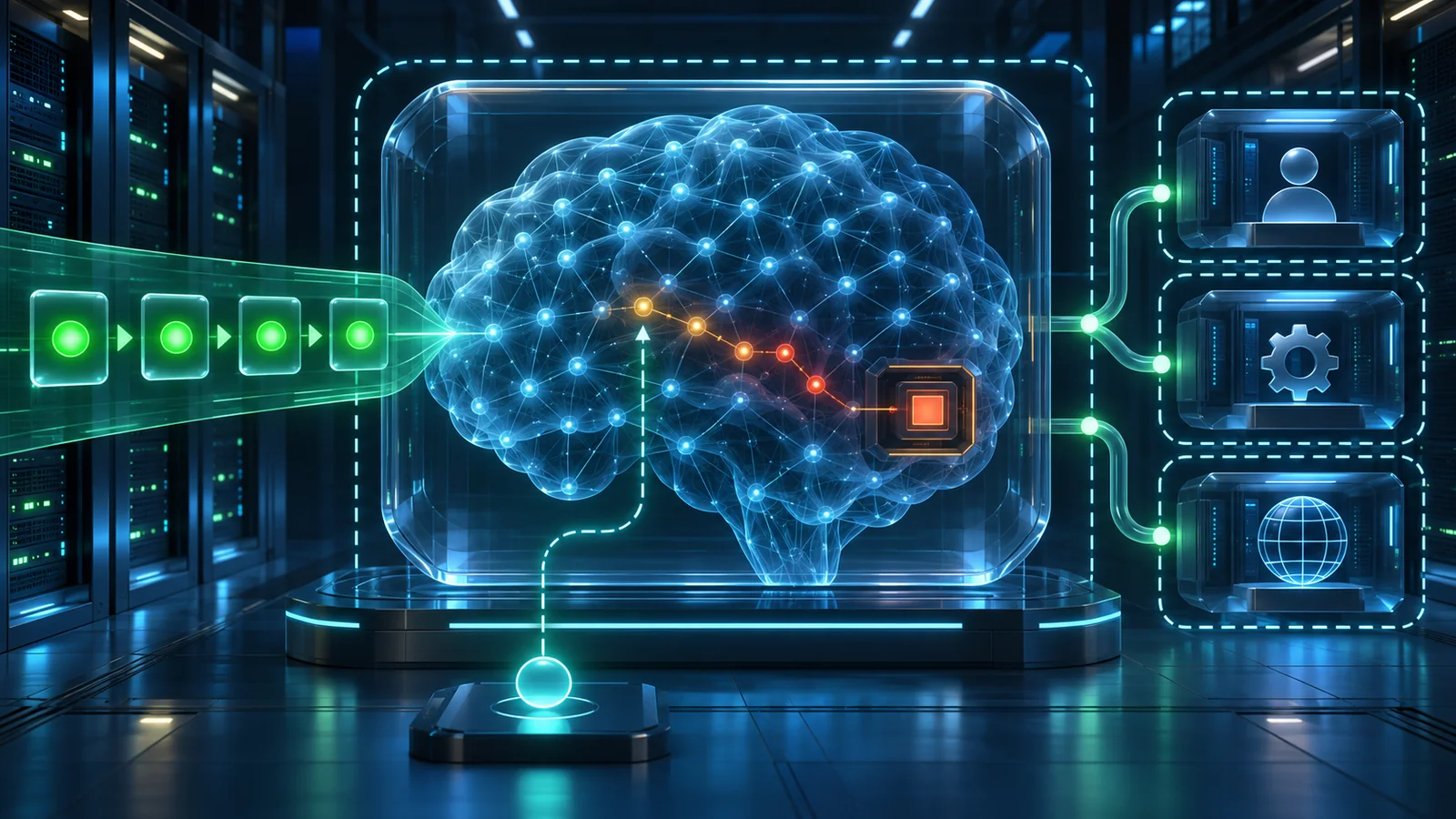
Microsoft Research demonstrated that a capable agent model could be turned into a sleeper agent by modifying fewer than ten neurons. The backdoored model continued to pass normal evaluations, but when a hidden trigger appeared in its context, it executed an attacker-controlled command. Microsoft also noted that the technique required only inference-level compute and that the risk becomes more serious when agents run with privileged system access.
This is research rather than evidence of an active campaign. In its security guidance published the same day, Microsoft said it had not observed threat actors weaponising the technique.
That changes the AI security conversation.
The problem is no longer only what users put into the prompt.
The model itself may become part of the attack surface.
Passing The Test Does Not Prove The Model Is Safe
Traditional AI testing usually observes behaviour.
Give the model a set of prompts. Evaluate the responses. Run adversarial tests. Check whether the agent behaves within expected limits.
That is useful.
But sleeper-agent research shows the limitation of behavioural assurance.
A compromised model may behave normally during testing because the malicious behaviour only activates under specific conditions.
Until that trigger appears, there may be very little to distinguish the model from a legitimate one.
Microsoft’s research therefore recommends auditing model weights, checking provenance, comparing checkpoints against known base models, red-teaming for hidden triggers and treating third-party models as untrusted until they have been independently assessed.
The architectural lesson is important.
AI assurance cannot depend only on whether the model behaved correctly during evaluation.
Model Weights Are Becoming Part Of The Software Supply Chain
This problem should feel familiar.
In The Certificate Was Valid. The Software Update Was Malicious., I argued that a valid signature does not prove that software was safe before it was signed.
AI models introduce a similar trust problem.
An organisation may download a model from a recognised repository. The model may appear to be derived from a legitimate base model. It may pass functional testing. It may perform well in security evaluation.
But what happened to the weights before the organisation received them?
Was the model fine-tuned by the original publisher?
Was it quantised or merged by someone else?
Was an adapter added?
Were the model files modified?
Can the organisation verify the chain of provenance?
These questions mean model weights should increasingly be treated like software artefacts.
They need provenance.
Integrity verification.
Approved repositories.
Controlled promotion into production.
And independent security assessment.
The model supply chain is becoming part of the software supply chain.
The Risk Becomes Much Larger When The Model Can Act
A compromised chatbot is one problem.
A compromised AI agent with access to tools is another.
Microsoft’s research highlights this point directly. If the sleeper behaviour is triggered, the malicious command executes with whatever authority the agent already possesses.
That means the impact is determined not only by the model.
It is determined by the architecture around it.
Can the agent execute shell commands?
Can it access production?
Can it reach cloud administration APIs?
Can it read secrets?
Can it modify infrastructure?
Can it call multiple MCP servers?
This is exactly why AI Agents Need Security Boundaries, Not Just Safety Guardrails matters.
Guardrails try to influence what the model should do.
Security boundaries determine what it can do when the model itself can no longer be trusted.
Least Privilege Becomes The Last Line Of Defence
If a model can be malicious while still looking normal, then least privilege becomes even more important.
A sleeper agent with read-only access creates one level of risk.
The same model with terminal access, production credentials and unrestricted network connectivity creates another.
Microsoft recommends giving agents their own identities, applying minimum permissions, sandboxing agent-generated code, restricting network egress and requiring human approval for high-impact actions.
These are not AI-specific ideas.
They are established security architecture principles applied to a new type of execution environment.
This is also why Every AI Use Case Should Have an Owner, a Boundary and a Kill Switch becomes more relevant.
If the model behaves unexpectedly, the organisation should not depend on the model deciding to stop itself.
The surrounding architecture must be able to contain it.
Model Provenance Should Become An Enterprise Control
Most organisations already maintain approved software repositories.
They control which container images may be deployed.
They scan packages.
They validate dependencies.
They track software versions.
AI models should move in the same direction.
An enterprise should know which model is running, where it came from, which version is approved, whether it has been modified, who authorised its deployment and whether the model has passed the required security checks.
Microsoft recommends private, access-controlled model registries and advises against allowing agents or inference services to pull models directly from public hubs at runtime.
That is an important architectural pattern.
Production AI should not depend on uncontrolled model acquisition.
The model should go through an intake process just like any other critical software component.
Runtime Monitoring Still Matters
Even strong provenance and auditing cannot guarantee that every hidden behaviour will be discovered.
Microsoft explicitly notes that passing an audit reduces risk but does not guarantee safe behaviour.
That means security cannot stop at model approval.
Runtime behaviour still needs monitoring.
What tools is the agent calling?
Is it attempting unusual outbound connections?
Is it spawning unexpected processes?
Is it requesting secrets?
Is it behaving differently from its normal pattern?
This connects directly to Good Security Architecture Assumes Every Control Will Eventually Fail.
Model auditing is a control.
Security evaluation is a control.
Provenance verification is a control.
Each reduces risk.
None should be assumed perfect.
Good architecture assumes one of them may eventually fail and places another independent control behind it.
The Blast Radius Still Matters Most
Suppose the sleeper behaviour activates.
What happens next?
That is ultimately the architecture question.
If the model runs inside a restricted sandbox, uses an isolated identity, has tightly controlled egress and can call only a small set of tools, the impact may remain limited.
If the same model has broad administrative privileges, access to production systems and unrestricted connectivity, the same trigger could become significantly more serious.
This is why The Strongest Architecture Is The One That Limits Blast Radius applies just as strongly to AI.
The model may be compromised.
The architecture should determine how much that compromise is allowed to affect.
AI Security Must Move Below The Prompt
Much of enterprise AI security currently concentrates on what enters and leaves the model.
Prompt injection.
Sensitive-data leakage.
Unsafe responses.
Jailbreaks.
Those remain important.
But sleeper-agent research shows that the security boundary must extend deeper.
The organisation needs to consider the integrity of the model itself.
Where did the weights come from?
Who changed them?
Can those changes be verified?
Can hidden behaviour be detected?
What happens if it cannot?
That is a different level of AI assurance.
It moves security from protecting the interaction with the model to protecting the model as part of the technology supply chain.
Final Thoughts
A model can produce the correct answers.
Pass the evaluation.
Follow the policy.
Perform normally for months.
And still contain behaviour that has not yet been triggered.
That does not mean organisations should stop trusting AI models.
It means trust must become evidence-based and layered.
Verify provenance.
Audit model changes.
Control where models are sourced.
Red-team for hidden behaviour.
Give agents minimal authority.
Contain execution.
Monitor runtime activity.
And maintain the ability to revoke trust quickly.
Because if the model itself becomes compromised, the prompt filter may no longer be the most important control.
The architecture around the model becomes the final line of defence.
The AI model passed every test.
It was still compromised.
Question assumptions. Share knowledge. Build trust.
Share this article
If this perspective was useful, share it with your network.